



Water, Sanitation & Hygiene (WASH) Program
-
by
Ahmed Ahmed
Expanding access to safe water and healthier living conditions.
Damage to water networks, sanitation facilities, and treatment systems, combined with fuel shortages and overcrowded displacement conditions, has increased public health risks across Gaza. Families often struggle to obtain safe water for drinking, cooking, and hygiene, while shortages of sanitation supplies make it difficult to maintain healthy living environments.
Program Purpose
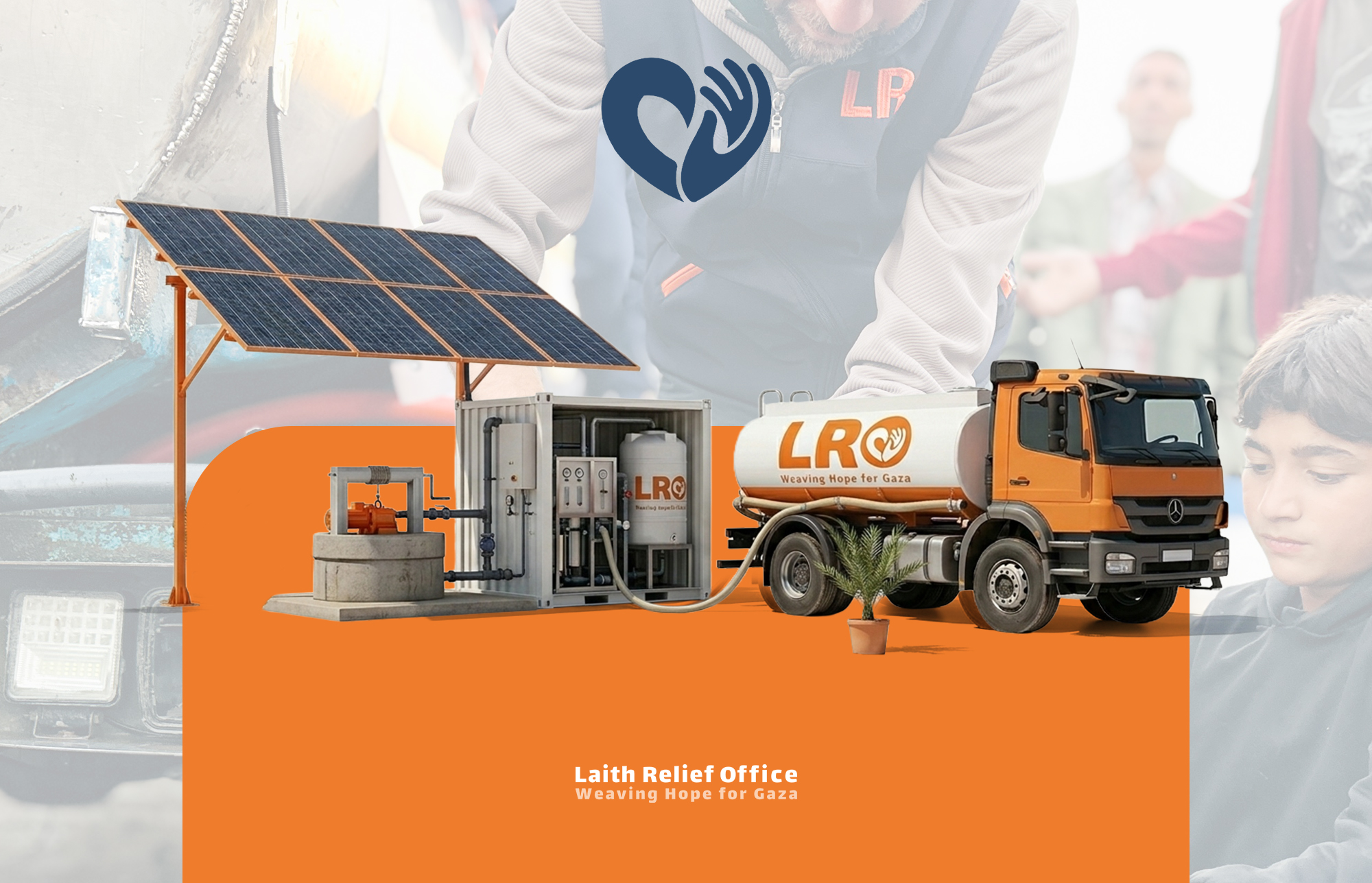
The WASH Program combines emergency water delivery, water-infrastructure support, sanitation assistance, hygiene supplies, and community awareness to improve access to safe water and reduce preventable health risks.
Key Program Activities
- Deliver safe drinking water by tanker to shelters, camps, and underserved communities.
- Drill, rehabilitate, and maintain water wells where technically feasible.
- Establish or support desalination and water-treatment systems.
- Install solar energy systems for wells, desalination units, and water facilities.
- Provide water-storage tanks and support local water-distribution points.
- Distribute personal and family hygiene kits and household cleaning supplies.
- Support sanitation facilities and environmental cleaning in displacement settings.
- Deliver hygiene-awareness sessions on handwashing, safe water handling, waste management, and disease prevention.
- Monitor water quality and coordinate safe storage and delivery practices.
Related Project Areas
- Safe Drinking Water Tanker Distribution
- Water Well Drilling and Rehabilitation
- Desalination and Water-Treatment Support
- Solar-Powered Water Facilities
- Water Storage and Community Distribution Points
- Family Hygiene Kit Distribution
- Shelter Sanitation and Environmental Cleaning Campaigns
- Hygiene Promotion and Public Health Awareness
- Water Quality Monitoring
Expected Outcomes
The program reduces the daily burden of obtaining water, supports safer hygiene and food preparation, and lowers exposure to waterborne and communicable diseases. Infrastructure and renewable-energy investments also improve the continuity and sustainability of essential water services.