How Donations Contribute to Supporting Students and Continuing Their Educational Journey
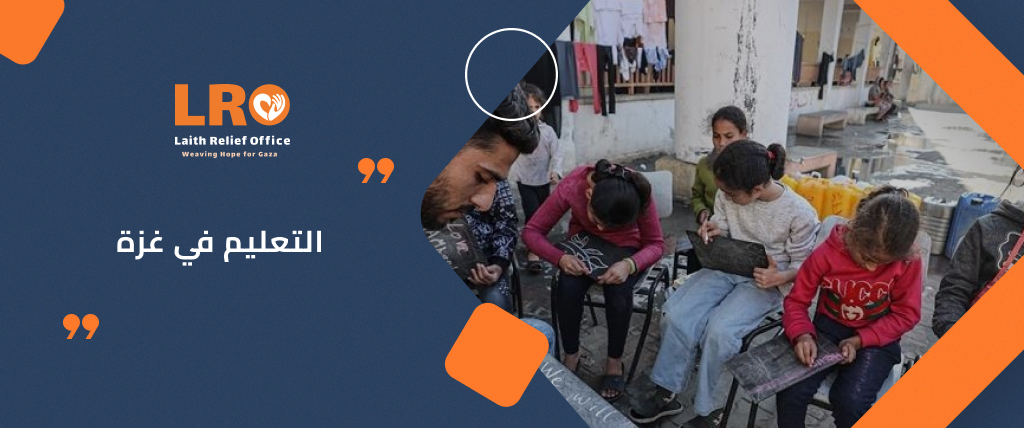
The Israeli occupation continues its aggression against the Gaza Strip, which lives under the weight of a harsh blockade. The consequences of this brutal war have affected every aspect of life, including education. With the continued deterioration of infrastructure and the direct bombing of schools and universities, education has turned into a daily battle faced by students in Gaza.
How can a nation rise without education? And how can children under siege build their future amid destruction? In Gaza, these questions are not merely reflections; they are a daily reality. The occupation understands this well and works to destroy the future of students and block their path to education.
Challenges Facing Education Under War and Siege in Gaza
For many years, the education sector in Gaza has faced severe challenges, which have worsened due to the ongoing brutal war and repeated military assaults. Although education is one of the most fundamental human rights, the reality on the ground shows a struggle to gain knowledge under inhumane conditions.
Schools suffer from a shortage of equipment and stationery, laboratories lack basic tools, and students do not have enough opportunities to explore the outside world or participate in cultural and educational exchange programs. All of this existed even before the war. Today, however, schools have disappeared or turned into shelters that the occupation targets whenever it wishes.
Due to the complete interruption of electricity and internet services, students are no longer able to participate in online classes or access modern sources of knowledge, making distance learning—or even studying at home—extremely difficult, and perhaps impossible.
In addition, the widespread destruction of school and university infrastructure has disrupted the higher education process. Rebuilding these institutions may require many years of effort and international assistance, which further complicates the educational situation.
The war has caused continuous threats to the lives of students and teachers, creating fear and panic that negatively affect students’ ability to focus on their studies. Moving between schools has also become dangerous under the deteriorating security situation.
Many families in Gaza suffer from displacement due to bombing and the destruction of homes. This has turned many students into refugees within their own homeland, disrupting their daily and educational lives. The war in Gaza does not only destroy schools; it steals children’s dreams and opportunities.
Many students may be forced to stop studying or move to new schools, which affects their psychological stability and academic achievement. Anxiety and stress also deeply affect their mental and emotional health.
Repeated exposure to violence and bloody scenes causes psychological disorders among students that may have long-term effects. Although some psychological support programs exist to help children, the harsh reality often obstructs these efforts.
Teachers in Gaza face enormous challenges due to the shortage of educational resources and the lack of psychological and technical support. They are also under great pressure to continue teaching despite difficult circumstances and to provide a safe learning environment for students amid ongoing aggression.
During the current Israeli aggression, all universities in the Gaza Strip have been targeted, and Israeli forces have killed more than 6,000 male and female students and 100 university professors. Under these tragic circumstances, university students in Gaza have been deprived of their right to education for more than a year.
It cannot be ignored that education in Gaza suffers from harsh conditions due to continuous wars, yet determination and resilience remain an essential part of resisting this difficult reality.
The Role of Education in Empowering Gaza’s Youth
Education in Gaza is one of the pillars of building and empowerment in a besieged society that continues to face repeated attacks. Education is the strongest weapon for Gaza’s youth in the battle of life, enabling an entire generation to reclaim its role in society and build a brighter future for Gaza and its people.
Education gives young people in Gaza awareness of themselves and their cause, and it strengthens their national and cultural identity. Educational institutions do not only provide curricula; they also help instill values of belonging, freedom, and community participation.
With high unemployment rates among graduates, it has become necessary to direct education toward practical and technical skills. Vocational and technical education, along with entrepreneurship, enables young people to create their own job opportunities instead of waiting for scarce employment.
Empowering Gaza’s youth through education does not only mean preparing them for the labor market. It also means preparing them to become leaders, community builders, and decision-makers. Every young person who possesses knowledge and skills is a project of change and a new hope for Gaza.
Leading Organizations Supporting Education in Gaza
Many local and international organizations play an important role in providing support and assistance, whether through building schools, supplying educational tools, training teachers, or offering scholarships. Among the most prominent of these organizations is UNRWA, which is considered the largest operator of schools in the Gaza Strip and manages hundreds of schools.
UNICEF supports emergency education in Gaza during the war and seeks to provide a safe learning environment, psychosocial support for children, school repairs, and the distribution of educational supplies.
Education For Employment connects education with the labor market and provides vocational and technical training programs for university students and graduates. Islamic Relief also contributes through scholarships, school construction and rehabilitation, and projects that develop vocational and technical education.
Save the Children focuses on education in emergencies and runs projects to support children affected by trauma caused by Israeli wars on the Gaza Strip. There are also many local organizations that focus on developing creativity and innovation in education.
How Can We Support Education in Gaza?
There are many ways to support education, ranging from local initiatives to international scholarships. Some institutions offer programs to support university students in Gaza and provide scholarships for outstanding students and those with limited income, such as Esnad Association and Friends of Gaza Association.
In light of the destruction of educational infrastructure, the Jordanian company Jo Academy launched an initiative to provide free educational content for students in Gaza. Educational content was produced for all school subjects in cooperation with Jordanian teachers, covering grades from first grade to Tawjihi, with the aim of enabling more than 650,000 students to continue their education.
An-Najah National University also launched the “Resilient Education” initiative, which aims to enable students from Gaza to continue their university education online as visiting students for a limited period, without the student or their university bearing any financial costs.
Another initiative was also launched in partnership with the Mediterranean Universities Union and the Palestinian Student Support Fund, aiming to provide distance education for university students in the Gaza Strip.
Individuals and institutions can participate in supporting education by volunteering to provide tutoring, organizing educational workshops, offering psychological and social support to affected students, and providing schoolbooks, computers, or internet access for students in need.
Supporting education in Gaza is not only the responsibility of institutions; it is a humanitarian duty that falls upon everyone. Through donations, volunteering, and raising awareness, we can all contribute to building a better future for the children and youth of Gaza.
Despite war and siege, hope remains deeply rooted in the hearts of Gaza’s people. Gaza’s schools have never been merely walls; they have always been factories of knowledge and the future. Gaza’s universities also remain beacons of higher education. Investing in education remains the true investment in rebuilding Gaza and empowering a generation that will carry its cause high.