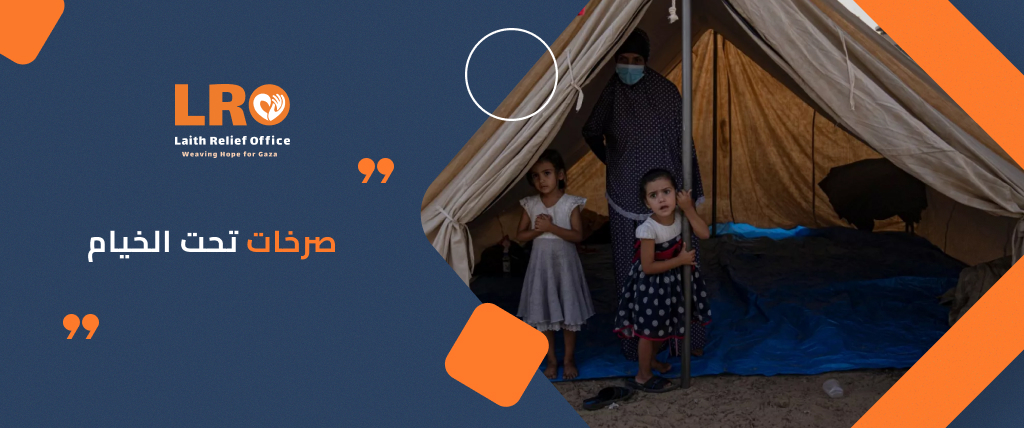
In the heart of the Gaza Strip, where war does not knock on doors but breaks into them without permission, tens of thousands of Palestinians live in temporary displacement camps that have turned into a permanent shelter for suffering and waiting. The “tent” has become the title of a life fractured by deprivation, beneath which souls cry out for survival and dignity.
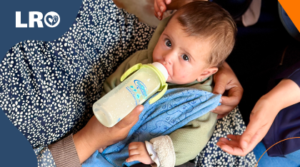
Children Without a Childhood: How Do Young Children Live Inside the Camps?
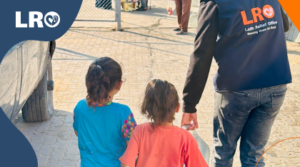
Since the beginning of forced displacement, hundreds of thousands of children have been cut off from their schools. Many schools have been turned into shelter centers, and the educational infrastructure has been destroyed. Education has come to a halt, and the child who once dreamed of becoming a doctor or an engineer now has only one concern: surviving another day.
Play, the natural space where a child releases their energy, has become a luxury unavailable to these young ones. The camp yards are narrow, and danger surrounds them from every side. Playing inside the tent is filled with confinement, while playing outside it is filled with danger. Laughter has turned into silence, and swings have become memories.
Many children suffer from severe psychological trauma due to the bloody scenes they witnessed during displacement: destroyed homes, relatives they lost, and the unforgettable sounds of explosions. One mother says: “My son has not spoken since his grandfather’s house was bombed before his eyes. He just stares into emptiness.”
Children suffer from fear, insomnia, and panic attacks, amid an almost complete absence of specialized psychological support.
In the absence, illness, or martyrdom of fathers, children are forced to carry burdens far beyond their age. A child who has not yet turned ten helps his mother distribute food, another carries water containers from long distances, and a third takes care of his younger siblings. Childhood is torn from its roots, and the young are forced to grow up before their time.
Protecting children inside displacement camps is not a humanitarian luxury; it is a moral and legal duty. Children need urgent psychological support programs, safe places to play, an immediate return to education even through alternative means, and protection from exploitation and violence.
Children inside the camps do not only miss their homes; they miss their very lives. With every passing day, they are pushed further away from their childhood. Saving them is not merely about providing aid; it is about restoring their right to simply be children.
Heat, Hunger, and Fear: The Daily Lives of Displaced People Under Tents
At the heart of prolonged suffering, displaced Palestinians in Gaza live under worn-out tents that protect them neither from the scorching heat of the sun, nor from painful hunger, nor from constant fear. The tents have become repeated scenes of pain, written by harsh days and nights without mercy and with no end in sight.
With the first hours of dawn, the suffering of families in the camp begins. Children and men go out in search of water from mobile tanks or contaminated sources.
Meanwhile, women continue trying to prepare a simple meal from flour or canned food. The heat begins early, and the sun becomes a merciless enemy beneath the tent fabric, which turns into an oven of flames.
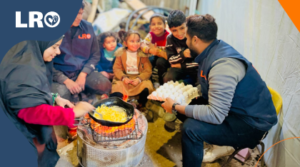
Breakfast is often nothing more than a piece of dry bread or a can of tuna shared among family members. There is no kitchen, no gas, no refrigerator — only simple tools used over gravel. On many days, there is barely any food at all, so they make do with water or tea if it is available.
By midday, the tent becomes unbearable. There are no fans and no ventilation. Children faint, and the elderly struggle to breathe under the suffocating heat. Hunger gnaws at their stomachs, and aid does not arrive regularly.
As the sun sets, the camp does not become calm; instead, a new round of fear begins. There is no electricity, only a few small lamps or candles.
The sound of aircraft circles in the sky, and any nearby explosion wakes the children as they scream. There is no peaceful sleep and not a single moment of safety.
Families begin arranging their bedding on the dirt floor. Mosquitoes and insects attack the children, and the cold creeps in despite the heat of the day. No one knows what tomorrow will bring: bombardment, famine, or disease. Everything is possible, and everything is frightening.
Women in the Camps: Doubled Suffering Under Displacement
Many women have lost their husbands because of the war, becoming the sole providers for their families. Some are forced to stand in long lines to obtain food and water, or to search for firewood to cook whatever they can for their children.
In the absence of a safe and supportive environment, women bear responsibilities beyond their capacity, while they themselves suffer from psychological and health crises.
The tent sheltering the family is not a place of comfort, but a cramped space with no doors or walls. It offers no privacy for women, especially when it comes to personal hygiene, caring for children, or even changing clothes.
Pregnant and breastfeeding women face an even more dangerous situation, as there is no adequate medical care, no proper nutrition, and no psychological support.
Many of them give birth in harsh conditions, without a doctor or proper sterilization, putting both their lives and the lives of their babies at risk.
Despite this dark reality, women in displacement camps do not raise the white flag. You find them organizing lines, distributing food, raising children, and supporting one another.
Some of them try to create safe spaces or provide psychological support to other women, offering a small gesture of hope in a sea of pain.
What Do Displaced People Need Now?
The first thing displaced people need is safe and dignified shelter. Thousands of families are living under worn-out tents that do not protect them from heat or cold and often lack privacy, creating a heavy psychological burden, especially for women and children.
There is an urgent need to provide weather-resistant tents or temporary housing units that offer greater safety and privacy.
As for food and water, the situation is catastrophic. Many families cannot find anything to feed their children, while also suffering from a severe shortage of clean water.
Displaced people need regular and balanced meals, as well as safe and sufficient drinking water for every person each day, in addition to cooking and food storage tools.
On the health side, medical needs are increasing day by day, amid the weakness of the healthcare system and the lack of medical facilities inside the camps. Residents need field healthcare services, medicines for chronic diseases, and special care for pregnant and breastfeeding women.
Hygiene and sanitation represent a major challenge, as diseases spread due to weak infrastructure and the lack of proper hygiene facilities.
There is an urgent need to provide safe and separate bathrooms, personal hygiene supplies such as soap, sanitary pads, and baby diapers, along with proper waste disposal systems.
Alongside material needs, there is another equally important aspect: psychological and social support. Children and women in particular are living in states of stress and trauma as a result of war and displacement.
There is an urgent need for psychological support teams, the creation of safe spaces for children, and community support centers that help people adapt and reduce the psychological effects of war and displacement.
Education is also one of the most affected sectors. With schools destroyed and some of them turned into shelters, thousands of children have been cut off from education.
These children need alternative learning opportunities, whether through temporary education centers or digital learning support, in addition to the provision of school supplies and support for teachers.
Displaced people need protection from exploitation and violence, especially women and children. Displaced individuals must be registered in an organized way to ensure that aid reaches them fairly, with monitoring mechanisms put in place to prevent violations. In addition, their right to a voluntary and safe return to their homes must be guaranteed whenever conditions allow.
Initiatives to Support Displaced People in Gaza
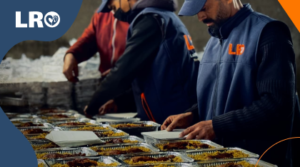
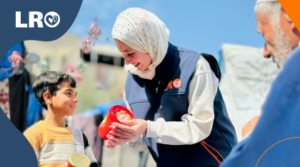
Despite the conditions of bombardment and blockade, Palestinian society has shown a great level of solidarity. Many volunteers have launched initiatives to distribute hot meals, collect clothes and blankets, and secure water for the camps.
Youth-led campaigns have also emerged, organizing simple recreational activities for children to help ease psychological pressure.
Laith Relief Team has also played a significant role in supporting the people of northern Gaza through individual initiatives and projects that directly address the population’s basic needs.
Civil society organizations in Gaza, such as the Palestinian Red Crescent Society and the Medical Relief Society, are working within their available capacities to provide basic healthcare services, first aid, and food aid distribution.
Some of these organizations have also launched temporary centers to provide psychological and social support for women and children inside the camps.
Palestinians in diaspora countries — from Europe to Jordan and Lebanon — have launched campaigns to collect cash and in-kind donations, which are sent through trusted organizations to Gaza.
These initiatives varied between medical and food sponsorships, providing supplies for children, and establishing funds to support emergency education.
Some international organizations, such as UNRWA, the Red Cross, and Doctors Without Borders, are making great efforts despite security restrictions.
These efforts include distributing food supplies, setting up mobile clinics, and providing psychological support. However, these initiatives face major challenges in movement, securing funding, and ensuring safe access to the camps.
Activists and supporters around the world have launched online campaigns to collect donations and support, using social media platforms. These campaigns focus on funding small projects such as purchasing tents, electric generators, water purification devices, and school bags for children.
Local and international initiatives have also emerged to establish temporary schools or small classrooms inside the camps. Some volunteer teachers have created simple study circles to teach children reading and writing, or to help them catch up on the curriculum they have missed.
The cries of displaced people under the tents in Gaza remain a witness to an open wound that has not healed — an ongoing tragedy that words are not enough to describe.
Yet it calls upon the conscience of the world to act, for Gaza is home to real souls trapped in silence.